Cognitive Coaching
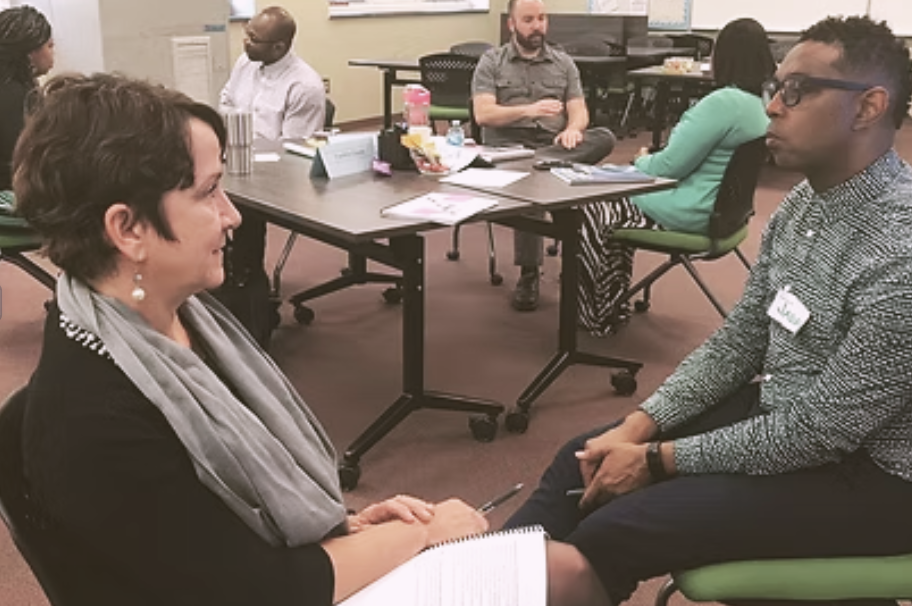
The Cognitive Coaching 8-Day Foundation Seminar is an intensive professional learning experience designed to build leaders' capacity to support self-directed growth in educators. Rooted in the belief that teaching is a complex intellectual activity, the seminar is grounded in research demonstrating that teachers who think at higher levels produce students who are higher achieving, more cooperative, and stronger problem solvers. Cognitive Coaching is a research-based model that works by capitalizing on and enhancing the thinking processes that underlie every instructional decision.
The mission of Cognitive Coaching is to produce self-directed individuals with the cognitive capacity for excellence, both independently and as members of a professional community.
Throughout the seminar, participants develop the knowledge, skills, and identity needed to serve as effective mediators of thinking. Specifically, participants learn how to develop trust and rapport with those they support, cultivate an identity as a mediator of thinking, and utilize structured conversation frameworks for planning, reflecting, and problem resolving. The seminar also focuses on developing teachers' autonomy and sense of professional community, while fostering higher levels of efficacy, consciousness, craftsmanship, flexibility, and interdependence.
This seminar is well suited for instructional coaches, school leaders, and any educator who works alongside teachers in a supporting or supervisory role.
Instructional Coaches and Leaders (k-12)
In the eight-day Seminar, participants learn how to:
- Develop trust and rapport
- Develop an identity as a mediator of thinking
- Utilize conversation structures for planning, reflecting and problem resolving
- Develop teachers’ autonomy and sense of community
- Develop higher levels of efficacy, consciousness, craftsmanship, flexibility and interdependence
- Apply four support functions: coaching, evaluating, consulting, collaborating
- Utilize the coaching tools of pausing, paraphrasing, and posing questions
- Distinguish among the five forms of feedback
- Use data to mediate thinking